 Image 1 of 1
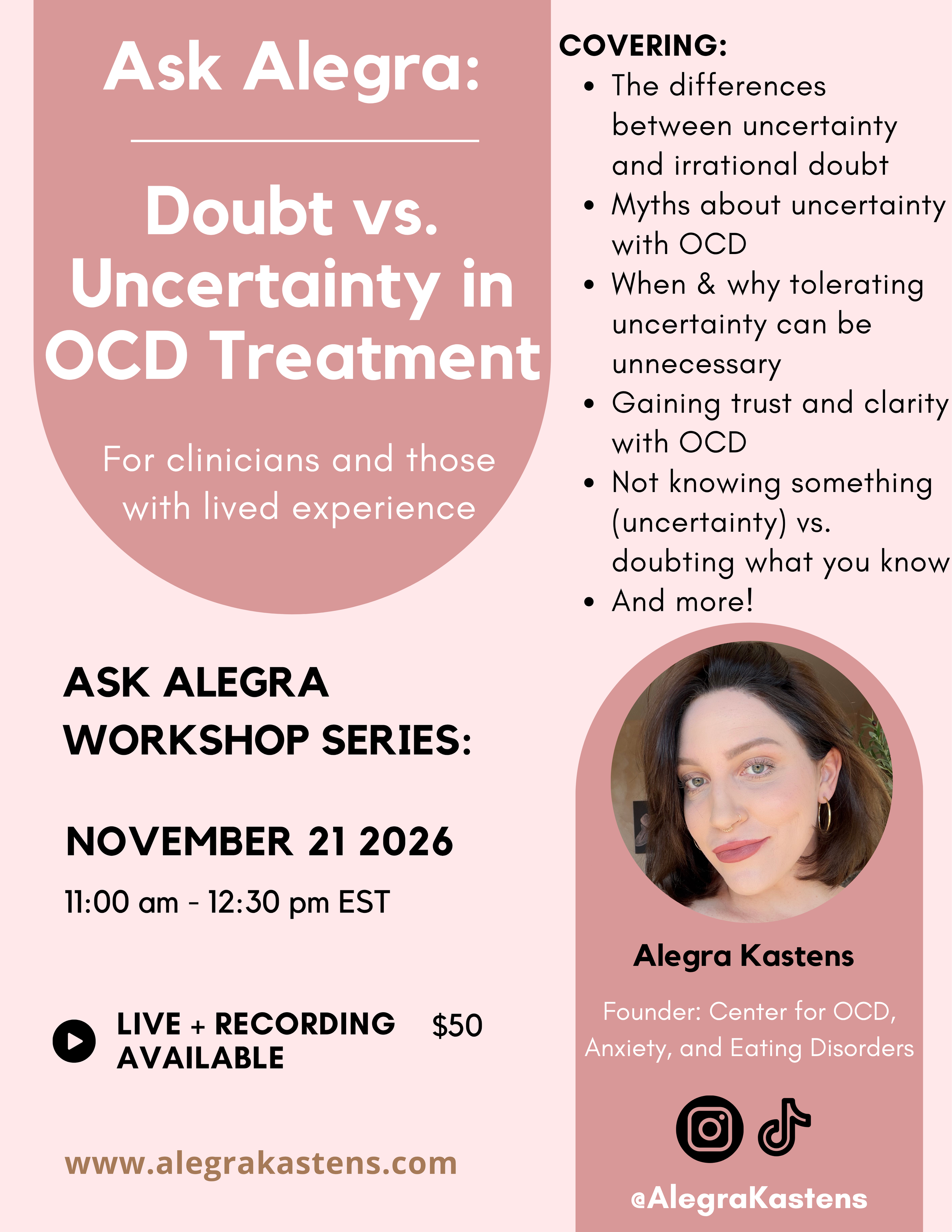
Have you been told that tolerating uncertainty is NECESSARY to recover from OCD? Do struggle with it because accepting that you could be someone you're not (ex. a violent pedophile) doesn’t feel right to you? Have you been told that an acceptance of uncertainty is synonymous with Exposure & Response Prevention (ERP) therapy? Are you having trouble distinguishing between true uncertainty (not knowing) and an irrational doubting of what you do know? If so, this workshop is for you!
It’s true that uncertainty exists in life and with OCD at times:
“Is my partner my forever person?” – Relationship OCD
“What if I get sick from touching things on the subway?” – Contamination OCD
“What is the meaning of life?” – Existential OCD
However, there are things in life we CAN be know; things that people without OCD are certain about. If someone without OCD doesn't have to tolerate uncertainty about being a pedophile or murderer, neither does the person with OCD.
In the hour and a half presentation, we will address:
The differences between truly not knowing something (uncertainty) and doubting what you know (irrational doubt)
Myths about uncertainty as it relates to OCD and treatment
When and why accepting uncertainty can be unnecessary and potentially harmful
Carrying out evidence-based treatment for OCD without accepting uncertainty when it is not necessary
Gaining trust and clarity with OCD
The difference between response prevention (not engaging with OCD) and accepting uncertainty (that you don't know the answer)
And more!
The last 30 minutes of the workshop will be comprised of a Q&A where you can ask questions related to the workshop or anything else!